Miniaturk—All of Turkey on a 1::25e scale on the shores of the Golden Horn
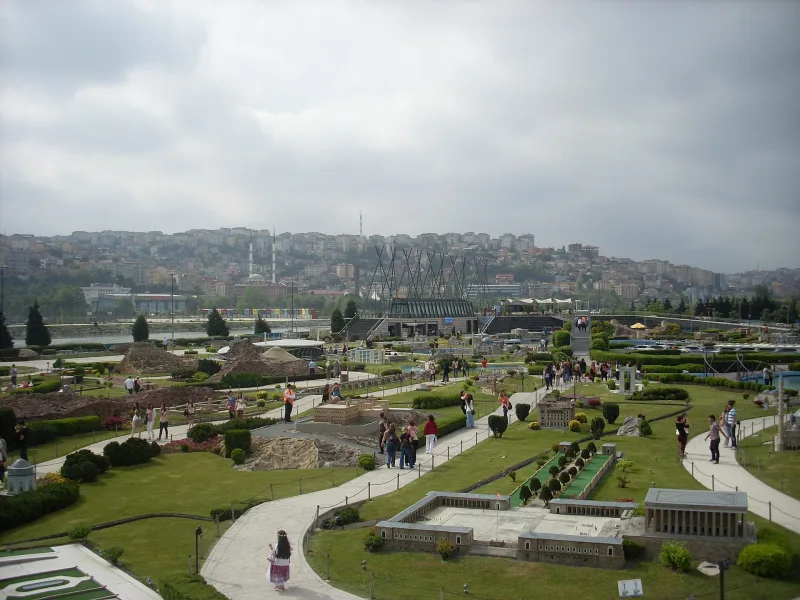
On the northeastern shore of the Golden Horn, in Istanbul’s Sütlüce district, lies a remarkable park where you can “tour” half the country and glimpse into its past in a single day. Miniaturk is the world’s largest miniature park by area, opened on May 2, 2003, under the motto “A small model of a great country.” Spanning 60,000 square meters, it features 135 scale models of historical and modern structures from Turkey and the former Ottoman lands, all built to a 1::25 scale. Here, Hagia Sophia stands alongside the Mausoleum of Halicarnassus, trains run between Cappadocia and the Bosphorus Bridge, and small boats sail along actual waterways. Miniaturk transforms abstract “textbook geography” into a living, moving, and vibrant journey.
The History and Origins of Miniaturk
The idea to create an open-air “showcase of Turkey” was conceived at the turn of the 2000s, when Istanbul city authorities were looking for a way to revitalize old industrial wastelands along the Golden Horn. The foundation stone was laid on June 30, 2001; construction took nearly two years. The park opened to visitors on May 2, 2003, and immediately received the status of a municipal museum under the administration of the Istanbul City Hall.
The location was not chosen by chance. Sütlüce—a neighborhood long known for its fish trade and small workshops—needed a new identity. The shore of the Golden Horn, which historically connected Istanbul to the sea, became a natural “timeline”: here, by the water, where Ottoman warehouses once stood, the park’s designers decided to recreate three thousand years of Anatolian history in miniature.
The park’s concept was based on three principles: the monument’s recognizability, the representativeness of the era, and the technical feasibility of constructing the model. Based on these criteria, structures reflecting Hittite, Ancient Greek, Roman, Byzantine, Seljuk, Ottoman, and Republican architecture were selected. Each model was assembled by a special team of engineers and artists—hence the striking level of detail: down to the roof tiles and the carvings on the columns.
Miniaturk was the first place in Turkey to introduce an audio guide: there is an information kiosk next to each model, and through a mobile app, visitors can listen to a narration in one of nine languages—Turkish, English, French, German, Spanish, Russian, Arabic, Farsi, and Japanese. For Russian-speaking travelers, this is a rare treat: most Turkish museums do not offer Russian-language support.
Over time, the park expanded: new structures were added to the original collection of models, the Victory Museum and Crystal Istanbul were opened, a children’s play area was set up, and a miniature railway was laid. Today, Miniaturk is one of Istanbul’s most visited museums, particularly popular with school field trips: Turkish teachers bring children here to learn about their own country.
In a sense, Miniaturk plays the same role that “Grand-Maket” once played in St. Petersburg, Russia, and Madurodam in The Hague, Netherlands—which, incidentally, Turkish Wikipedia directly cites as a source of inspiration. But while European miniature parks usually focus on modern infrastructure, the Turks have placed their bet on three thousand years of cultural heritage—from Hittite fortresses to Republican-era bank buildings.
Architecture and What to See
Of the park’s 60,000 square meters, 15,000 are dedicated to the models themselves—this is the “heart” of Miniaturk. Another 40,000 square meters are occupied by open areas, alleys, and playgrounds, while 2,000 square meters consist of ponds and canals where small ferries and cruisers sail. The parking lot can accommodate 300 cars. The walk around the models is designed as a circular route: visitors move from Istanbul to Anatolia, and then to the “overseas” monuments of the former Ottoman Empire.
The Istanbul Section
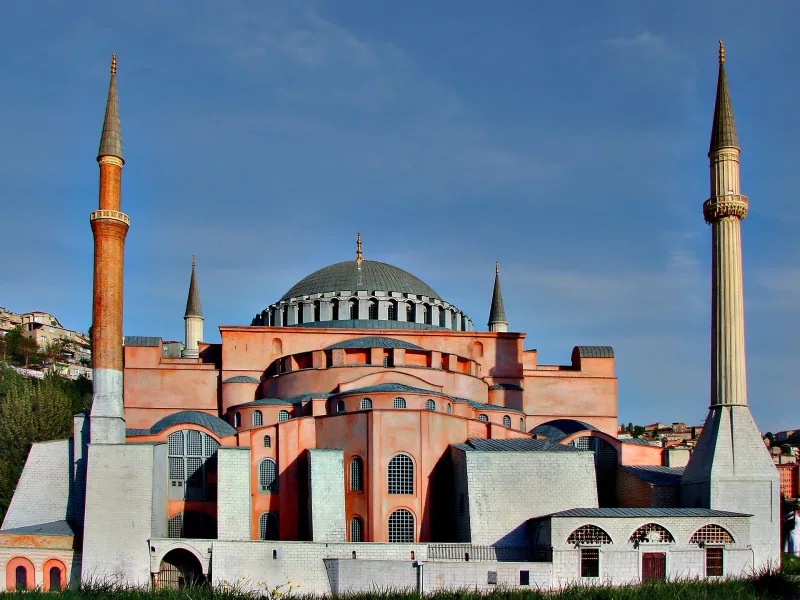
Sixty models are dedicated to Istanbul itself, and the tour begins with them. Almost the entire postcard-perfect panorama of the city is represented here: Hagia Sophia, the Blue Mosque, Süleymaniye, Topkapı and Dolmabahçe Palaces, the Maiden’s Tower and Galata Tower, the Church of Saint Irene, Eyüp Sultan Mosque, the Fountain of Ahmed III and the German Fountain, and the Kırkçeşme water supply system. The Bosphorus Bridge and Atatürk Airport stand apart as a separate group. A notable detail: the miniature walls of Constantinople, complete with all their gates and towers—the best way to explain to a child how the defensive belt of the Byzantine capital was constructed.
Anatolian Section
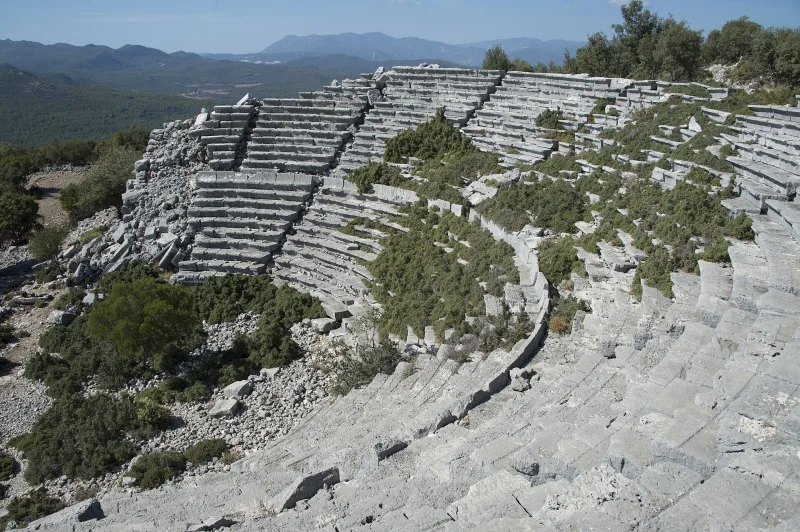
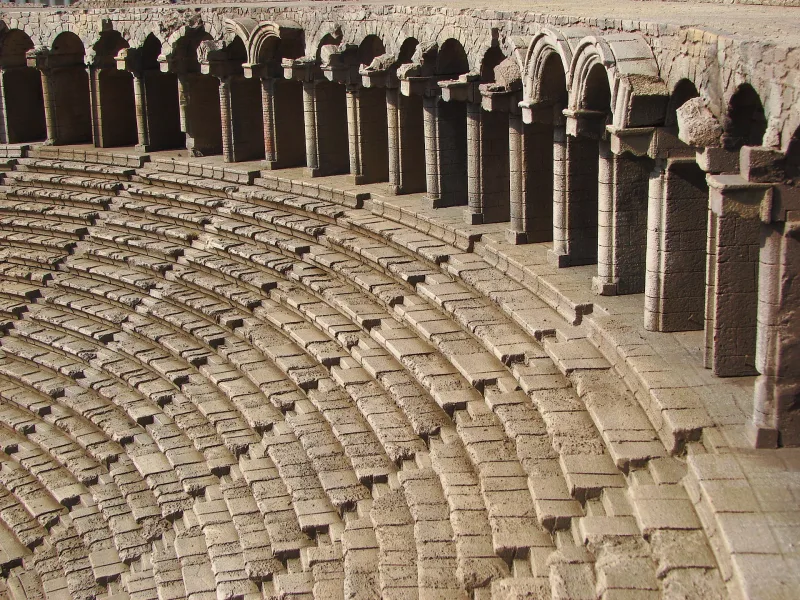
Sixty-three (according to other sources, 64) models represent mainland Turkey. Here, ensembles that would normally require a trip across the entire country to see have been scaled down to pocket size: the Ishak Pasha Palace in Doğubeyazıt, the Mevlana Mausoleum in Konya, the Sumela Monastery on the cliff near Trabzon, the Celsus Library and the Aspendos Theater, the Karamanli and Cifte Minareli madrasas in Erzurum, the Great Mosque of Divriği, and the Yashil Mosque in Bursa. Natural phenomena are not forgotten either: nearby are Pamukkale with its white travertines and the Cappadocian “fairy chimneys,” carved from miniature tuff.
The Seven Wonders and the “Foreign” Section
In a separate corner stand two Anatolian wonders of the ancient world—the Temple of Artemis at Ephesus and the Mausoleum at Halicarnassus. Neither exists in Ephesus nor in Bodrum (only the remains of their foundations are there), and Miniaturk effectively restores their lost appearance. Thirteen models are dedicated to lands that were once part of the Ottoman Empire: the bridge in Mostar, the Ejad Fortress in Mecca, the Dome of the Rock in Jerusalem, and Atatürk’s house in Thessaloniki. This is a delicate gesture of remembrance—without political declarations, conveyed through architecture.
Moving models and interactivity
The main difference between Miniaturk and a “static” model is movement. Trains race along miniature tracks, trucks and buses crawl along the highway, the Topkapi ferry shuttles between the “European” and “Asian” shores in a large pond, and the boats are remotely controlled from a console. In front of the mini-stadium, which seats 53,000 spectators, stand four “fans” holding the flags of the Galatasaray, Fenerbahçe, Beşiktaş, and Trabzonspor: toss a coin—the stadium lights will come on, the club anthem will play, the flag will appear on the scoreboard, and the players will take the field. This simple trick works like a charm: both adults and children laugh.
Museums inside the park
There are two additional museums on the grounds. The Victory Museum (Zafer Müzesi) features a panorama of the War of Independence (1919–1923): scale models of the battlefronts, a photo exhibition featuring Atatürk, and sound and light effects recreate the atmosphere of the battles of Sakarya and Dumlupınar. Crystal Istanbul (Kristal İstanbul) — a unique collection: silhouettes of historic buildings are laser-engraved inside glass cubes and illuminated from within. This is particularly striking at dusk.
Entertainment Area and Children’s Routes
In addition to the models and museums, Miniaturk is deliberately designed as a family-friendly space. Here you’ll find the “Fairy Tale Tree”—a moving attraction that narrates six folk tales in the voices of actors. There is a maze and a large chessboard for children, the Flyride flight simulator with tours “over Turkey” and “over Istanbul,” as well as the “Upside-Down House” (Ters Ev)—rooms where the furniture is nailed to the ceiling, and visitors feel as if they are walking through an upside-down world. The Ottoman photo studio offers instant photos in the costumes of a sultan, a wali, or an odalisque: tourist clichés, but the children are thrilled, and parents get a ready-made souvenir. Finally, a twenty-seat sightseeing train runs throughout the grounds: it’s not fast, but it lets you “zone out” and simply watch the models glide by—especially welcome after an hour and a half of walking.
Interesting Facts and Legends
- Miniaturk is the first museum in Turkey to introduce an audio guide. Today, information about each model is available in nine languages, including Russian—a rarity for Turkish museums.
- The park’s motto is “Büyük Ülkenin Küçük Bir Modeli” (“A Small Model of a Great Country”). The creators deliberately chose not to limit themselves to Turkey’s modern borders and included Ottoman monuments from abroad to highlight the diversity of the cultural heritage.
- In front of the mini-stadium stands a “soccer attraction”: a coin dropped into the appropriate slot triggers the anthem of one of Istanbul’s four clubs, and tiny “soccer players” run onto the field—until the anthem ends. Turkish fathers have been returning here for years with new coins.
- Among the miniatures are the Temple of Artemis at Ephesus and the Mausoleum at Halicarnassus, two of the “Seven Wonders of the Ancient World.” In reality, only fragments remain of them, and Miniaturk effectively reconstructs them “as they were.”
- The park features the “Upside-Down House” (Ters Ev), a maze, a chessboard for children, the Flyride helicopter flight simulator with wind, rain, and snow effects, as well as the “Ottoman Photo Studio,” where you can have your picture taken in a 17th-century costume. This transforms the classic museum into a full-fledged family adventure.
How to get there
Miniaturk is located at İmrahor Caddesi, Sütlüce, on the northeastern shore of the Golden Horn, in the Beyoğlu district. Coordinates: 41.06° N, 28.948° E. Despite its proximity to the city center (about 6 km from Sultanahmet), this isn’t the most touristy part of Istanbul, and getting there requires a bit of planning.
The most convenient option is the Golden Horn city ferry (Haliç Vapuru): the line runs from Eminönü and Karaköy with a stop at Sütlüce—it’s a five-minute walk from the pier to the park. This route is a great mini-tour in itself, offering views of the Galata Tower. Alternatives include the Metrobüs (Metrobüs line to Halıcıoğlu) or city buses 36CE, 47, and 54HT from Taksim Square and Eminönü. By taxi from Sultanahmet, it takes about 20 minutes without traffic.
From Istanbul Airport (IST), take the M11 metro to Kağıthane and transfer to the M7; total travel time is about an hour. From Sabiha Gökçen (SAW), it’s more convenient to take the Havabus to Taksim and then continue by Metrobüs or taxi. For those with their own cars, there is a 300-space ISPARK secure parking lot at the entrance.
Tips for travelers
The park is open year-round, seven days a week, typically from 9 :00 to 19 :00 in the summer and until 17 :00–18 :00 in the winter; it’s best to check the official website for exact schedules and prices the day before your visit. Allow 2–3 hours for a leisurely tour; with children and rides, plan for half a day. Tickets often include access to Crystal Istanbul and the Victory Museum, which is more cost-effective than buying them separately.
The best times to visit are late spring (April–May) and early fall (September–October): mild weather, flower beds blooming along the models, and no summer humidity. In the summer, arrive either right at opening time or after 4 p.:00—the heat is more intense in the open-air areas than in the air-conditioned museums. Some attractions remain open in the rain, but the “stroll” experience is lost; on a clear winter day, the park is especially photogenic against the backdrop of the snow-covered Cappadocia models.
Wear comfortable shoes (the total walking route is about 2 kilometers), bring water, a hat, and sunscreen. Bring some small change for the kids—the “soccer” ride and the play boats accept coins. Download the Miniatürk mobile app in advance and bring headphones: the audio guide in Russian is much more informative than the brief descriptions on the display stands. Note that there is a cafeteria and a restaurant on the grounds, but many prefer to combine their visit with lunch at the neighboring seafood restaurant near the Sütlüce pier—they serve fresh anchovies and Golden Horn anchovies there.
For Russian-speaking travelers, Miniatürk is great both as a destination in its own right and as a “prelude” to a grand tour of Turkey: in just a couple of hours, you’ll visually take in everything that’s worth traveling to Cappadocia, Ephesus, Pamukkale, Konya, or Mount Nemrut for. It’s a good idea to visit the park on the first day of your trip so that later, standing before the real Sumela or Hagia Sophia, you can recognize them by their familiar silhouettes.